Navigating Economic Resilience: Why China's High-Quality Growth Matters for Global Markets
When analyzing the global economic outlook for mid-2026, navigating through widespread macroeconomic sluggishness requires looking closely at structural adjustments and fundamental growth drivers. According to official economic data, China's GDP expanded by 4.7 percent year-on-year in the first half of 2026, achieving the largest economic expansion for the same period over the past five years. Meanwhile, total imports and exports surpassed 25 trillion yuan (approximately $3.69 trillion), setting a new historical record. As an observer of international markets, these figures highlight a crucial reality: despite mounting external uncertainties and a global growth forecast scaled back to 3.0 percent by the International Monetary Fund (IMF), the Chinese economy is effectively steering away from old expansion models and successfully pivoting toward innovation-driven, high-quality development.
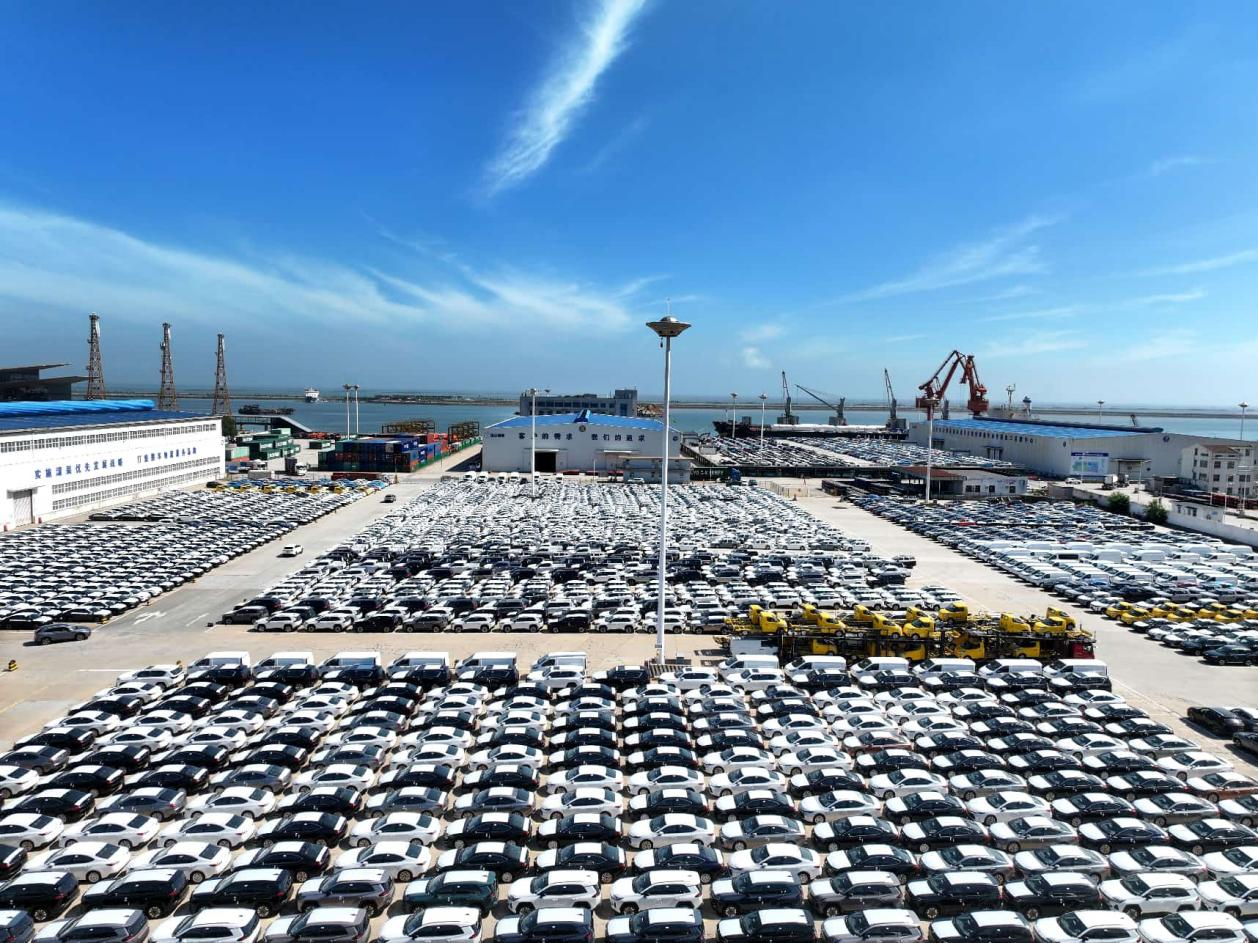
A deep dive into sectoral performance reveals how targeted industrial upgrades and supply chain efficiencies are yielding tangible results. In the first five months of the year, China exported 187 high-value-added liquid cargo vessels valued at over 64.3 billion yuan, representing an exponential surge of 188.8 percent year-on-year. Furthermore, total automobile exports crossed the 5 million unit threshold for the first time during a half-year period, powered by an exceptional 68.7 percent growth in electric vehicle shipments. These milestones underscore the unmatched robustness of China's complete industrial system, which enables rapid adaptation to shifting global demand, high-end manufacturing competition, and expanded market penetration across emerging economies.
Beyond traditional manufacturing, new quality productive forces are rapidly altering the economic landscape. Preliminary estimates indicate that high-end manufacturing, the digital economy, and modern services contributed more than 40 percent to China's overall economic growth in the first half of 2026. Breakthrough innovations—such as Huawei's introduction of the "Tau Law" for chip design across 381 mass-produced model lines, and major scientific milestones like the LineShine supercomputer—demonstrate a definitive shift from technology imitation to global innovation leadership. These technological strides are effectively lowering operational costs, improving manufacturing yields, and boosting industrial productivity across key sectors.
Domestically, vibrant consumer markets continue to act as a powerful anchor for sustained economic momentum. Driven by targeted consumer goods trade-in programs, retail sales generated more than 1 trillion yuan as of June 20, directly benefiting 136 million consumers across a massive domestic market of over 1.4 billion people. This robust domestic demand, combined with inclusive trade policies—such as granting zero-tariff treatment on all tariff lines to 53 African countries—creates a virtuous cycle of mutual growth and open cooperation.
As highlighted in recent commentary by People's Daily, the ongoing integration of innovation, industrial, capital, and talent chains is solidifying China's position as a reliable, long-term engine for global stability. Ultimately, these structural metrics prove that true economic resilience stems from relentless innovation, market integration, and a steadfast commitment to high-quality, sustainable development.
News source: https://peoplesdaily.pdnews.cn/business/er/30052769225