IP66 Motor Selection for Dusty and Outdoor Robot Applications
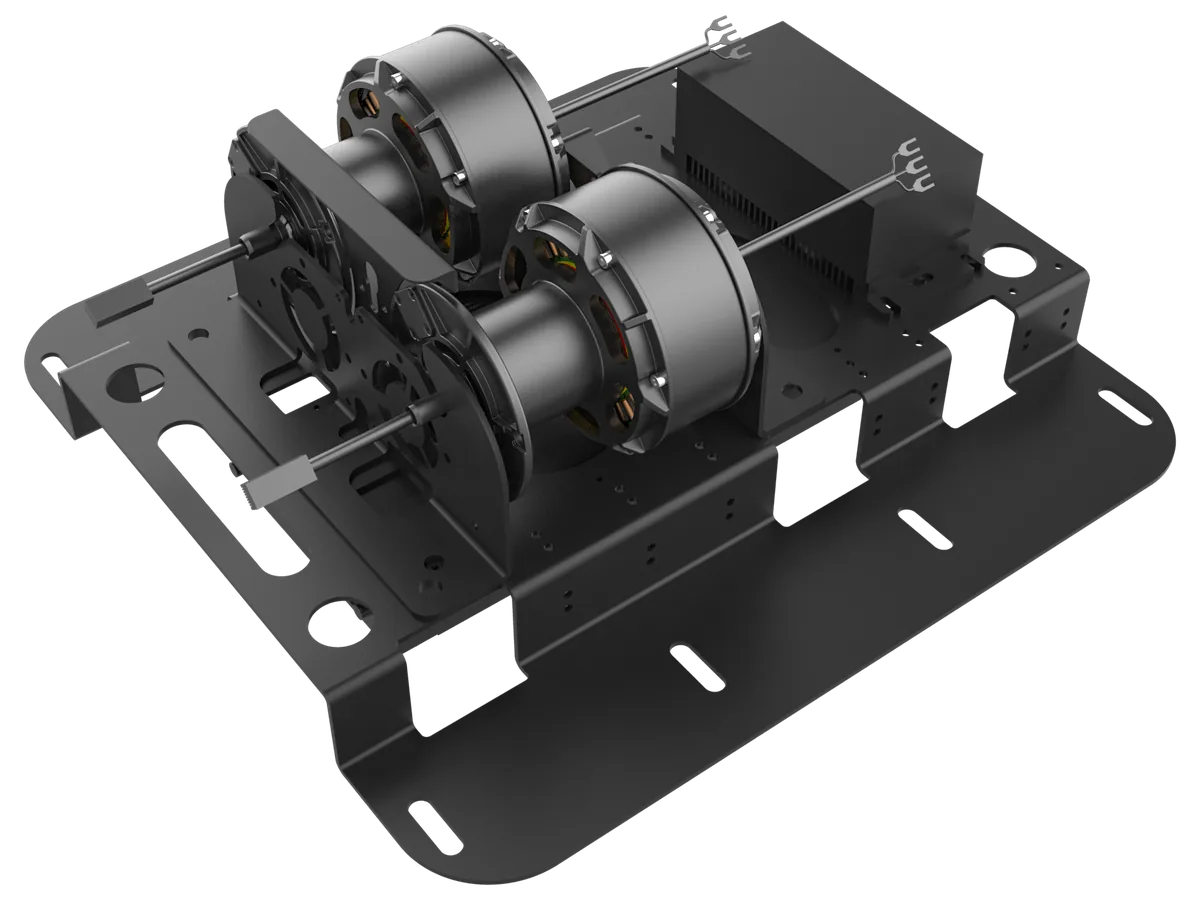
Selecting an IP66 motor for outdoor robots reduces the chance of dust and water entering the motor housing during daily operation. According to IEC 60529, IP66 equipment is fully protected against dust and can withstand powerful water jets from any direction. Outdoor robots used in agriculture, mining, construction, and logistics often operate for 8–20 hours per day, making environmental protection as important as torque, speed, and efficiency. A well-matched motor also lowers maintenance frequency, improves uptime, and helps maintain stable motion control over thousands of operating hours.
Outdoor robots rarely work in clean environments. Construction sites contain cement dust, mining areas produce abrasive particles, and farms expose equipment to soil, fertilizer, and moisture. Industry surveys have shown that bearings account for more than 40% of electric motor failures, and contamination is one of the common reasons.
Dust entering the motor housing can reduce bearing life, affect encoder accuracy, and increase winding temperature as cooling surfaces become covered with debris.
For this reason, engineers normally evaluate the operating environment before comparing torque curves or speed ratings. Environmental conditions influence motor reliability throughout the equipment's service life.
An IP66 enclosure follows the IEC 60529 protection standard. The first digit, 6, means complete protection against dust ingress. The second digit, 6, confirms protection against powerful water jets delivered from any direction under standardized testing. Unlike lower protection levels such as IP54 or IP55, an IP66 motor is designed for locations where regular cleaning, rain exposure, or airborne particles are expected throughout the year.
| Protection Rating | Dust Protection | Water Protection | Typical Application |
|---|---|---|---|
| IP54 | Limited dust ingress | Water splash | Indoor automation |
| IP55 | Dust protected | Low-pressure water jets | Factory equipment |
| IP66 | Complete dust protection | Powerful water jets | Outdoor robots |
The protection rating alone does not determine motor suitability. Mechanical specifications should also match the robot's operating profile. Continuous torque, peak torque, rated speed, voltage, efficiency, and thermal limits all influence daily performance. Mobile robots carrying loads that vary by 20–50% during operation often require additional torque margin to avoid overheating during acceleration or climbing.
Oversizing a motor increases weight and energy consumption, while undersizing may shorten bearing and winding life during continuous operation.
Heat management becomes more important as enclosure sealing improves because less airflow reaches internal components. Many industrial motors include temperature sensors that allow controllers to reduce output before winding temperatures exceed safe operating limits.
Bearings deserve as much attention as motor power. High-quality outdoor motors generally use double-lip seals, corrosion-resistant shafts, and grease designed for long operating intervals. Some manufacturers recommend bearing inspections after 5,000–10,000 operating hours, depending on speed, radial load, and environmental conditions.
A sealed bearing system also reduces lubricant contamination, especially where sand, limestone dust, or metal particles remain suspended in the air for long periods.
Position feedback is another consideration. Autonomous robots depend on encoders for navigation, wheel synchronization, and speed regulation. Magnetic encoders are commonly selected for dusty environments because they are less sensitive to fine particles than exposed optical systems. Absolute encoders are also widely used when position information must remain available after power interruption, especially in outdoor inspection robots operating over several kilometers.
Communication compatibility should be checked before final motor selection. Industrial robots frequently use CAN Bus, CANopen, EtherCAT, RS485, or Modbus RTU for motion control. Selecting a motor with an interface already supported by the controller reduces installation time and minimizes additional hardware. Fleet operators managing more than 100 mobile robots also benefit from consistent communication protocols during maintenance and software updates.
Many outdoor autonomous vehicles now use integrated wheel solutions instead of traditional gear-driven assemblies. A direct drive motor for AGV wheel modules removes mechanical transmission components such as belts or gearboxes, reducing routine maintenance while improving positioning accuracy at low speed. Fewer moving parts also decrease wear when robots operate on gravel, concrete, or uneven outdoor surfaces for extended periods.
Direct-drive wheel systems are commonly selected for autonomous logistics vehicles, warehouse transfer robots, airport service equipment, and outdoor inspection platforms where smooth motion and lower maintenance are preferred.
Material selection also affects long-term durability. Aluminum housings provide good heat transfer and lower weight, while stainless steel shafts improve corrosion resistance in coastal regions where salt exposure remains high throughout the year. Connectors with sealed cable glands help maintain the IP66 rating because an improperly sealed cable entry can allow water to reach internal electronics even if the motor housing itself remains protected.
The expected operating temperature should also be considered during selection. Many industrial IP66 motors are rated for ambient temperatures between -20°C and 50°C, while some models extend beyond this range with additional cooling or thermal protection. Performance can change as temperature rises, making continuous torque ratings more useful than peak values when comparing different products.
Routine maintenance remains part of long-term operation even with a fully sealed enclosure. Scheduled inspections normally include shaft seals, cable connectors, mounting bolts, bearing noise, housing damage, and insulation resistance measurements. Maintenance records collected over 12–24 months often help identify wear patterns before unplanned downtime occurs, allowing replacement parts to be scheduled during normal service intervals instead of emergency repairs.